
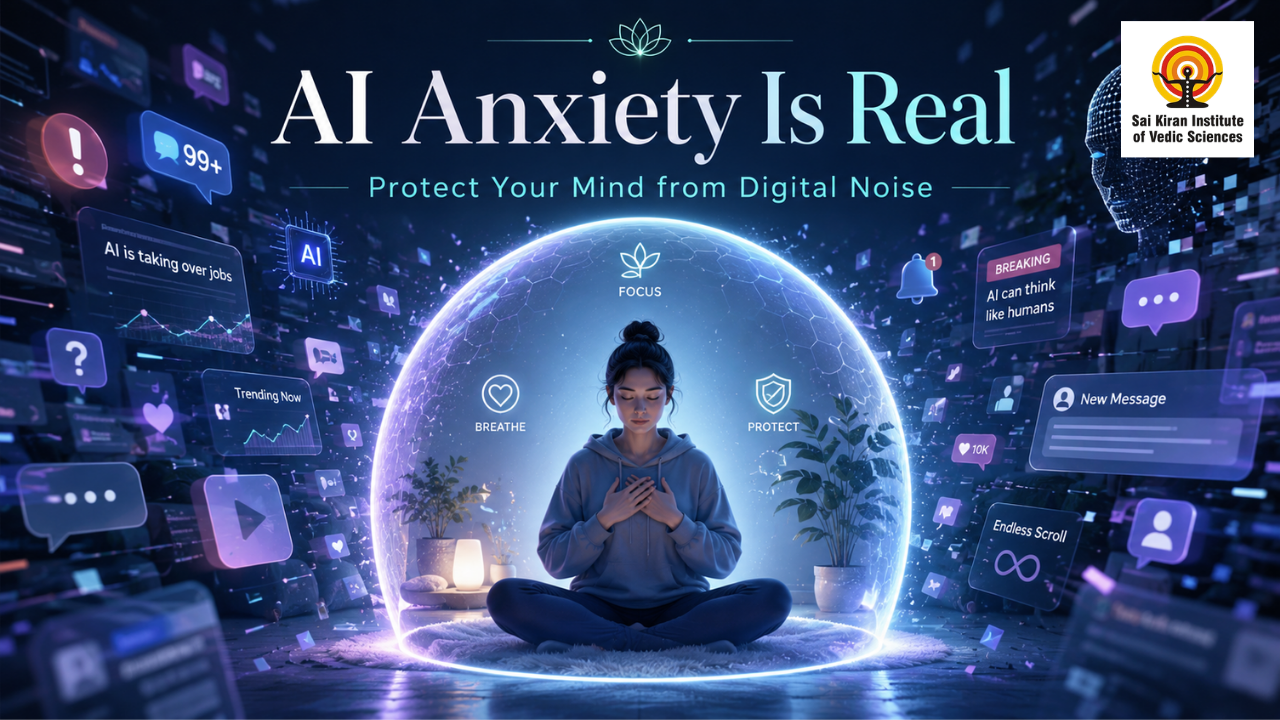
Search interest in terms like "AI psychosis" and "brain rot" has surged in 2026, alongside a growing conversation around what constant AI and digital exposure is doing to our minds. At the same time, more people than ever are naming their mental health struggles openly and seeking support — 2026 is being called a turning point year for how openly we talk about psychological wellbeing.
I'm seeing this collide in my own practice. Clients come in overstimulated, mentally foggy, and anxious in a way that doesn't trace back to one specific event — it traces back to a nervous system and mind that never get to switch off.
Why Digital Overwhelm Feels Different Now
This isn't the same "too much screen time" conversation we've had for a decade. What's new in 2026:
- AI is everywhere, offering instant answers, constant notifications, and an always-on feeling of needing to respond, optimize, or keep up.
- Attention spans are being reshaped, making it harder to sit with discomfort, boredom, or silence — all of which are essential for emotional processing.
- Comparison and information overload are compounding faster than our minds evolved to handle, leaving many people anxious without being able to name why.
The result is a kind of chronic mental noise — a mind that's always "on," even during rest.
The Cost of an Overstimulated Mind
When your mind rarely gets quiet, several things tend to happen:
- Sleep becomes lighter and less restorative
- Small stressors feel disproportionately overwhelming
- Focus and memory suffer
- Anxiety rises even without a clear trigger
- You feel disconnected from your own intuition and inner voice
This is where mindset coaching and NLP become especially valuable — not to reject technology, but to rebuild your mind's capacity to filter, focus, and find stillness on purpose.
Reclaiming Your Mind: A Practical Approach
Here's what I recommend to clients navigating digital-age overwhelm:
1. Schedule "unplugged" windows, not just screen-time limits.
Rather than just reducing minutes on your phone, create specific windows — mornings, meals, the hour before bed — that are fully device-free. This retrains your mind to tolerate quiet.
2. Practice single-tasking.
Multitasking trains the brain toward fragmented attention. Choose one task at a time, even for 10 minutes, to rebuild sustained focus.
3. Use meditation as mental hygiene, not a luxury.
Even five minutes of stillness daily helps your mind process the volume of input it's receiving. Think of it as brushing your teeth for your brain.
4. Reconnect with your own thinking through journaling.
With so much external input, it's easy to lose track of your own voice. Journaling — even a few lines a day — helps you distinguish your thoughts from the noise around you.
5. Get support before overwhelm becomes chronic anxiety.
NLP and mindset coaching can help you identify the specific thought patterns and habits keeping your mind in overdrive, so you can build sustainable, personalized strategies rather than generic advice.
You're Not Imagining It
If you've felt more anxious, foggier, or more disconnected than usual, you're not alone, and it's not a personal failing — it's a natural response to an environment that's asking more of our attention than ever before. The encouraging part of this trend is that more people are naming it and seeking support, rather than pushing through in silence.
If digital overwhelm is affecting your peace of mind, let's work through it together. [Book a consultation](https://calendly.com/dr-shalinimehta) to explore mindset coaching and NLP strategies tailored to your life.
If you're experiencing significant anxiety or distress, please know that support is available, and reaching out to a mental health professional is a strong and important step.