
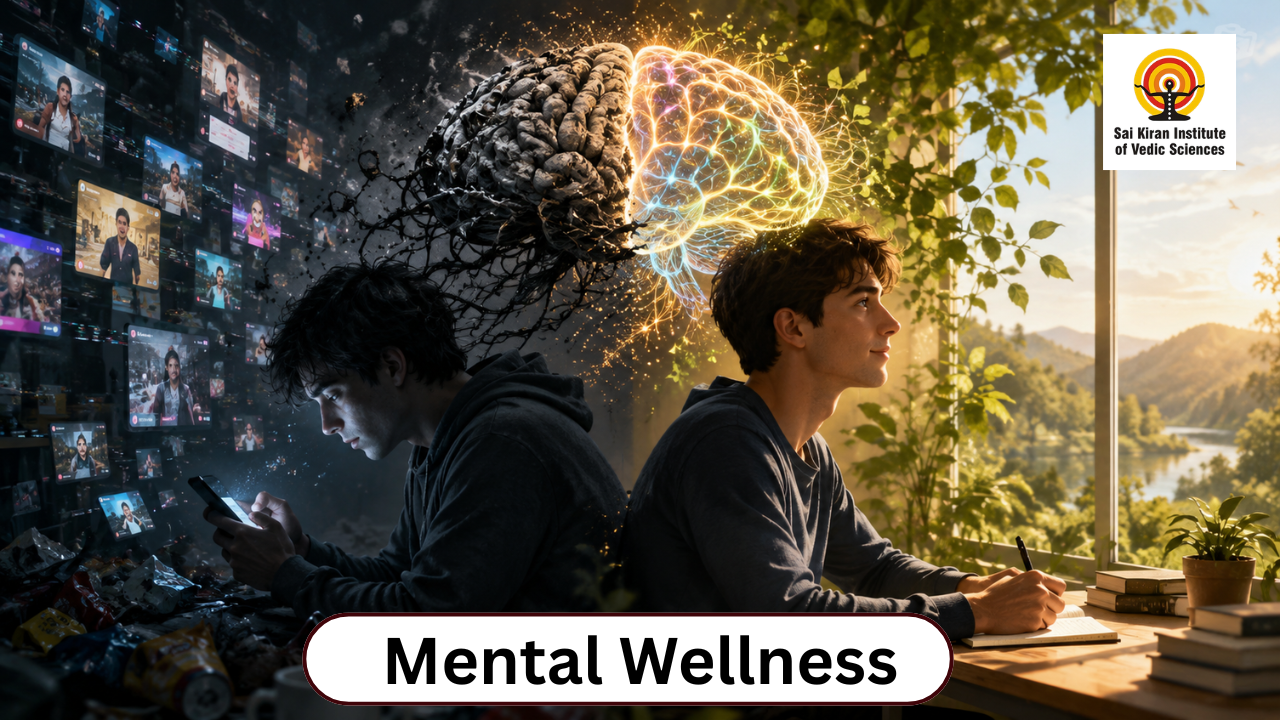
"Brain rot" started as internet slang for the fog you feel after hours of mindless scrolling. In 2026, it's become one of the fastest-growing mental health search terms online — and for good reason. Attention spans are shrinking, decision fatigue is rising, and more people than ever are describing the same symptoms: trouble focusing, restlessness without a phone in hand, and a nagging sense that their own mind feels foggy, reactive, and hard to control.
The instinctive fix everyone reaches for is a digital detox — deleting apps, setting screen time limits, buying a "dumbphone." These help. But they treat the symptom, not the underlying pattern. The real question is: **why does the brain default to the scroll in the first place, and how do you retrain that default?**
This is precisely the territory where Neuro-Linguistic Programming (NLP) and mindset coaching operate.
Brain Rot Is a Pattern Problem, Not a Willpower Problem
NLP is built on a simple but powerful idea: the brain runs on patterns — habitual loops between a trigger, a thought, and a behavior. Reaching for your phone the second you feel bored, anxious, or under-stimulated isn't a character flaw; it's a learned neural shortcut. And like any learned pattern, it can be consciously identified, interrupted, and replaced.
That's what separates NLP-based coaching from a generic "just put your phone down" approach. It works on:
- Identifying the real trigger** behind the scroll — boredom, avoidance, anxiety, loneliness — rather than treating all screen time as the same problem.
- Interrupting the automatic loop** using specific reframing and pattern-interrupt techniques, so the urge doesn't automatically win.
- Installing a new default response — one that actually serves focus, calm, or connection instead of numbing out.
Where Mindset Coaching Comes In
If NLP interrupts the moment-to-moment pattern, mindset coaching rebuilds the bigger picture around it: your relationship with focus, productivity, and self-worth. A lot of "brain rot" anxiety isn't really about screen time at all — it's guilt and shame about lost time, compared against an impossible standard of constant productivity.
Mindset coaching helps shift that internal narrative from *"something is wrong with my discipline"* to *"my attention has been trained in a certain direction, and it can be retrained in another."* That shift alone often reduces the anxious, self-critical loop that makes the scrolling worse.
A Simple Way to Tell If This Is You
Ask yourself: after a long scrolling session, do you feel *rested*, or do you feel *depleted, restless, and slightly guilty*? If it's the latter, this isn't really about the phone — it's about a pattern your mind has learned to default to when it wants an escape. That pattern can be changed.
Reclaim Your Focus at the Root
Dr. Shalini Mehta is a certified NLP practitioner and mindset coach with over 30 years of experience helping clients break unwanted mental patterns and rebuild focus, confidence, and clarity — not through more willpower, but through rewiring the pattern itself.
Book a consultation - (https://calendly.com/dr-shalinimehta) to start retraining your mind's default response, instead of fighting it every day.
This article is for general informational purposes and does not replace personalized medical or psychological advice.