
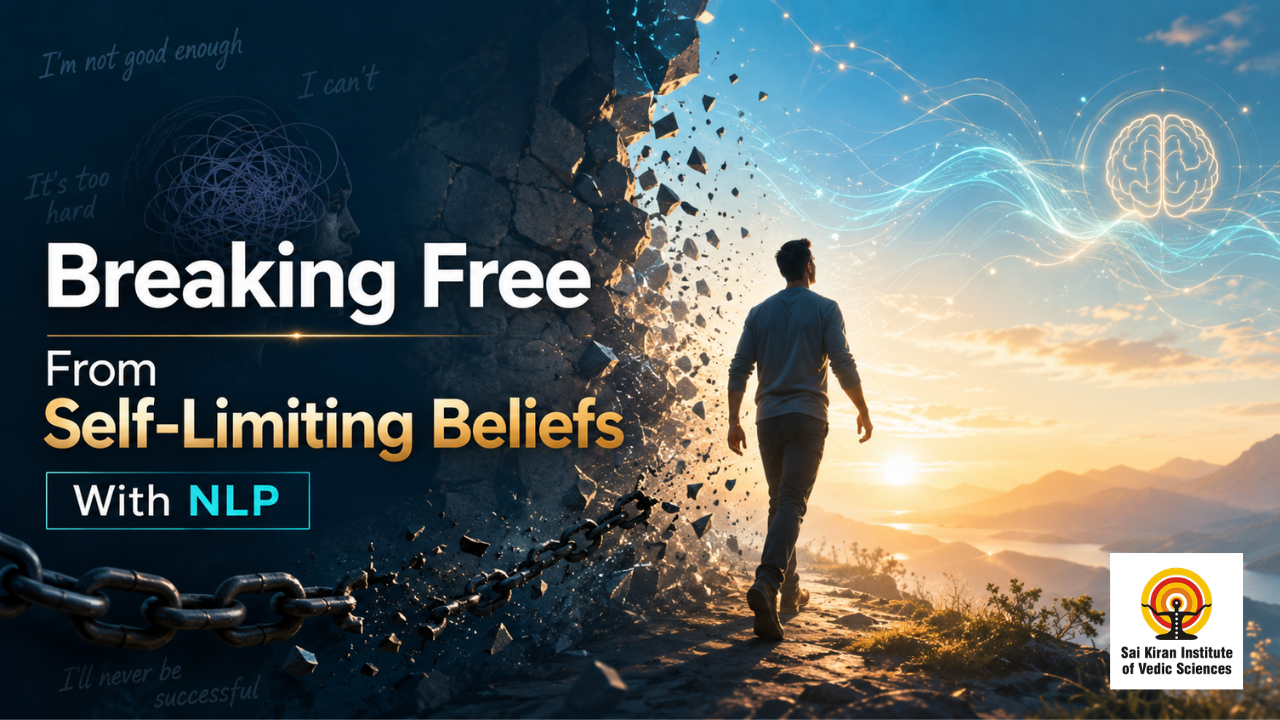
"I'm not good enough." "I always mess this up." "People like me don't succeed at that." If any of these thoughts sound familiar, you're not alone — and more importantly, none of them are facts. They're beliefs. And beliefs, no matter how old or deeply rooted, can be changed.
This is the foundation of Neuro-Linguistic Programming (NLP): the idea that the language we use with ourselves, and the mental patterns we repeat, actively shape our reality — often without us realizing it.
What Are Self-Limiting Beliefs, Really?
A self-limiting belief is a story we've accepted as true about ourselves, usually formed years ago from a single comment, a painful experience, or a pattern we saw modeled around us. A child told "you're too sensitive" may grow into an adult who hides their emotions for fear of being "too much." A student who struggled with one math test may carry "I'm bad at numbers" into a career that avoids anything analytical.
These beliefs feel true because we've collected years of "evidence" to support them — but that evidence was often filtered through the belief itself. Once you believe you're "bad with money," for example, your brain will notice and remember every financial misstep while conveniently forgetting the times you managed well.
How NLP Interrupts the Pattern
NLP works on the relationship between how we think (neuro), the language we use (linguistic), and the behaviors that follow (programming). Rather than spending years analyzing why a belief formed, NLP focuses on practical techniques to identify the belief, interrupt its pattern, and install a new, more empowering one in its place.
Some of the core tools include:
- Reframing — viewing a past event or belief through a new, more accurate lens
- Anchoring — creating a mental or physical trigger that shifts your emotional state on demand
- Language pattern shifts — changing how you speak to yourself, since your inner dialogue directly shapes your inner reality
- Modeling — studying and adopting the thought patterns of people who've already achieved what you want
Common Beliefs NLP Can Help Address
- "I'm not smart/talented/disciplined enough"
- "I don't deserve success, love, or happiness"
- "I always fail when it matters most"
- "I'm too old/young/inexperienced to change direction"
- "People like me don't get opportunities like that"
What Change Actually Looks Like
Change through NLP rarely feels dramatic in the moment — it feels like a quiet shift. A situation that used to trigger self-doubt starts to feel neutral. A decision you used to avoid suddenly feels possible. You stop hearing that old critical voice quite so loudly, and a calmer, more capable one starts to take its place.
This isn't about pretending everything is fine or forcing positivity. It's about examining the beliefs you've been unconsciously operating from and asking a simple but powerful question: Is this actually true, or is it just familiar?
You Are Not Your Old Story
The beliefs holding you back today were shaped by circumstances that no longer exist. You are not the child who was criticized, the student who struggled once, or the person who failed one time. With the right tools, it's entirely possible to update the internal script you've been running — and start writing a new one that actually reflects who you are now and who you're capable of becoming.
Ready to identify the beliefs quietly holding you back? [Book a consultation](https://calendly.com/dr-shalinimehta) and start rewriting your story.