
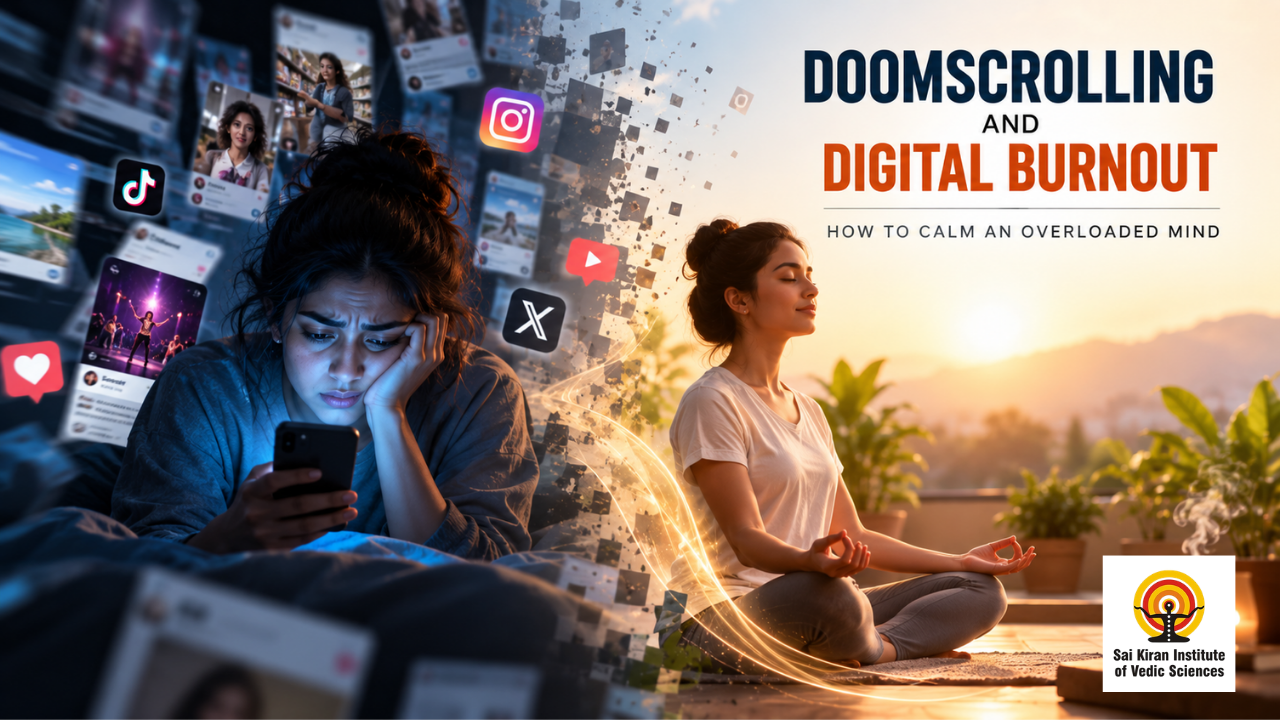
You pick up your phone "for just a minute." Forty minutes later you're tense, your thoughts are racing, and you can't remember what you were looking for. If that sounds familiar, you're not alone. Doomscrolling, the habit of endlessly consuming negative news and content, is one of the biggest drivers of modern anxiety.
Why we can't stop
Our brains are wired to notice threats. Every alarming headline or dramatic reel triggers a small stress response, and the endless feed keeps that alarm switched on. Over time your nervous system stays in "alert mode," even when nothing around you is actually wrong. This is the heart of digital burnout: you feel mentally exhausted, irritable and restless, yet strangely unable to put the phone down.
The signs to watch for
- Feeling anxious or low after using social media
- Trouble falling asleep because your mind won't switch off
- Difficulty concentrating on one task
- Reaching for your phone automatically, without deciding to
- A constant feeling of being "behind" in life
Why willpower alone doesn't work
Most people try to fix this by deleting apps or promising themselves to scroll less, and most slip back within days. That's because scrolling is rarely about the phone. It's a habit your subconscious mind uses to escape discomfort, boredom or stress. Until you address the feeling underneath, the urge keeps returning.
Five simple ways to reset
1. Create a "first hour" rule. Avoid your phone for the first hour after waking, so your day starts with intention rather than other people's chaos.
2. Name the feeling. Before opening an app, ask: "What am I feeling right now?" Often it's tiredness, loneliness or worry.
3. Practise slow breathing. Inhale for four counts and exhale for six. A longer exhale tells your body it is safe.
4. Curate your feed. Follow accounts that educate or uplift you, and mute those that leave you drained.
5. Build a replacement ritual. Swap one scrolling session a day for a walk, meditation, journaling or a call with a friend.
Go to the root cause
If anxiety, overthinking or constant stress is affecting your sleep, relationships or confidence, simple tips may not be enough. Mind-based approaches such as NLP and hypnotherapy work with the subconscious patterns that drive these habits. They help you understand why you react the way you do and build healthier responses from within.
Your mind deserves reset
You don't have to abandon technology to feel better. You only need to take back control of how you use it. Start small, stay consistent and be kind to yourself along the way.
Feeling overwhelmed and unsure where to begin? A one-to-one session can help you uncover what's really driving your stress and give you practical tools to feel calm and in control again.