
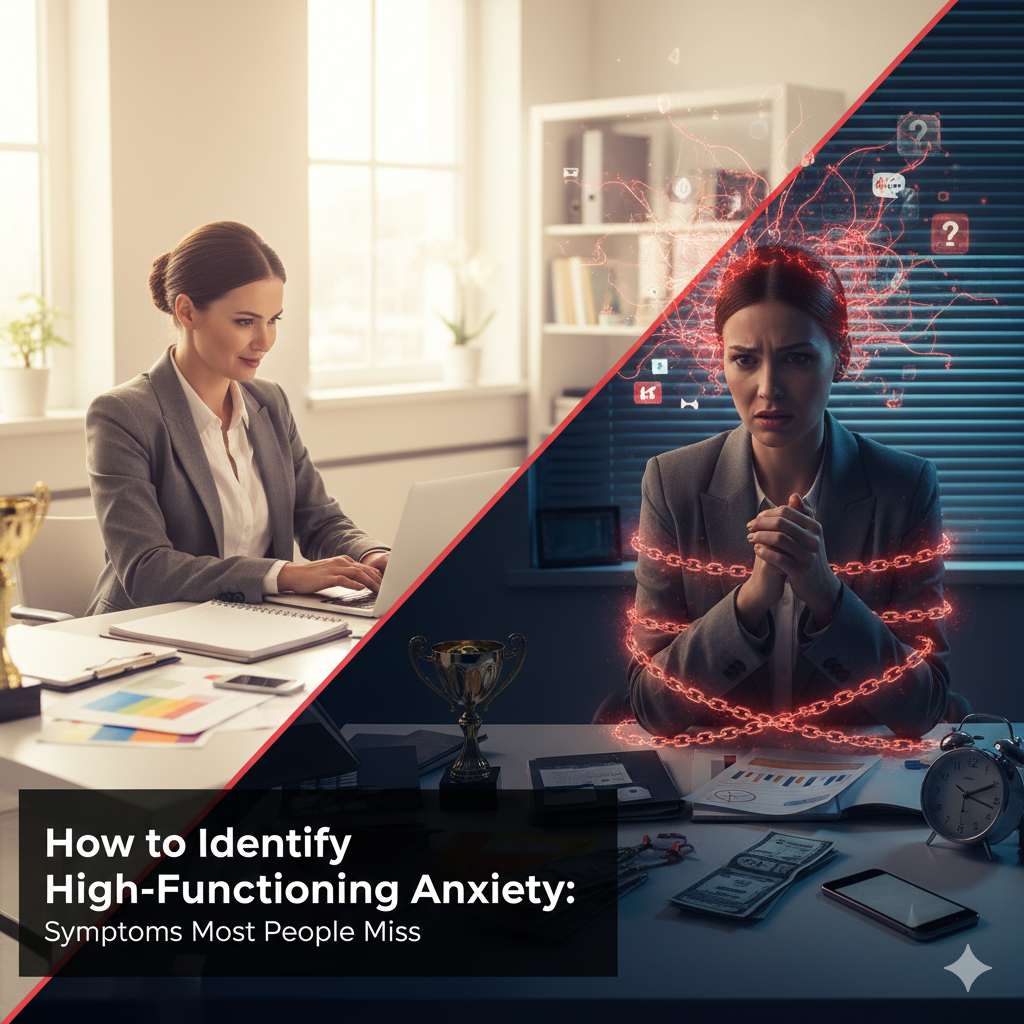
You’re a high achiever. You meet deadlines, your home is pristine, you say yes to every volunteer opportunity, and everyone considers you calm, reliable, and maybe even the "glue" that holds everything together.
But behind that impeccable facade lies a constant, low-grade hum of dread. If this sounds familiar, you might be dealing with High-Functioning Anxiety (HFA).
Unlike debilitating anxiety that prevents you from leaving the house, HFA forces you to over-perform in order to manage the inner turmoil. The biggest challenge? The symptoms are so normalized and often disguised as ambition or good habits that most people—and even those affected—miss them entirely.
Here are the key, subtle symptoms of HFA that often go unnoticed:
1. The Need for Constant Preparation & Over-Controlling
This isn’t just being organized; it’s feeling genuine panic if you don’t know every variable.
-
The Hidden Symptom: You feel physically sick before meetings unless you've prepared five extra slides that likely won't be needed. You send follow-up emails instantly to confirm things were received. You plan every detail of a social outing down to the minute, just to avoid an unexpected deviation that might feel like chaos.
-
The Underlying Fear: If you are not in absolute control, something terrible will go wrong, and it will be your fault.
2. Chronic Busyness and Avoiding Rest
You dread downtime. Your calendar is packed, and if you have a free evening, you feel restless and agitated, not relaxed.
-
The Hidden Symptom: Rest feels unsafe. When you stop moving, your anxious thoughts rush in, so you intentionally fill every moment—with work, exercise, chores, or social plans—to outrun your mind. You often feel physically exhausted but mentally wired.
-
The Underlying Belief: "If I slow down, I will fail, or I will finally have to deal with these feelings."
3. Inability to Say "No" (The People-Pleasing Trap)
Your drive to please others is directly tied to your need for external validation, which temporarily quiets your internal critic.
-
The Hidden Symptom: You take on too much, always volunteering for extra work, even when you are overwhelmed. You fear that saying "no" will lead to disappointment, rejection, or worse—that people will realize you’re not as capable as they think.
-
The Underlying Fear: Rejection and failure to meet impossible standards.
4. Repetitive Thought Loops and Reliving Conversations
Even after an event is over, your mind refuses to let go.
-
The Hidden Symptom: You constantly mentally "rewind" conversations you had hours or days ago, dissecting every word you said, analyzing the tone of others, and searching for proof that you messed up or offended someone. This is rumination disguised as "reflection."
-
The Underlying Mechanism: Your brain is attempting to solve a perceived social threat from the past to prevent it from happening in the future.
5. Physical Manifestations You Rationalize
Because your body is in a constant state of low-level fight-or-flight, it wears down physically.
-
The Hidden Symptom: Frequent headaches, constant muscle tension (especially in the jaw, neck, and shoulders), grinding your teeth at night, chronic stomach issues (IBS, acid reflux), or always feeling on the verge of a cold. You dismiss these as "normal stress" or "just needing more coffee."
-
The Underlying Reality: Your body is screaming for relief from the adrenaline and cortisol flooding your system.
The Path Forward: Acknowledging the Struggle
The first and hardest step is acknowledging that your "good habits" are actually coping mechanisms fueled by fear.
High-functioning anxiety is exhausting because the performance is unsustainable. If you recognize these symptoms, it's a powerful signal that your inner world needs as much attention as your professional life. Tools like Mindfulness, Hypnotherapy, and NLP are incredibly effective because they target the subconscious root of the need for control, replacing fear with internal safety.