
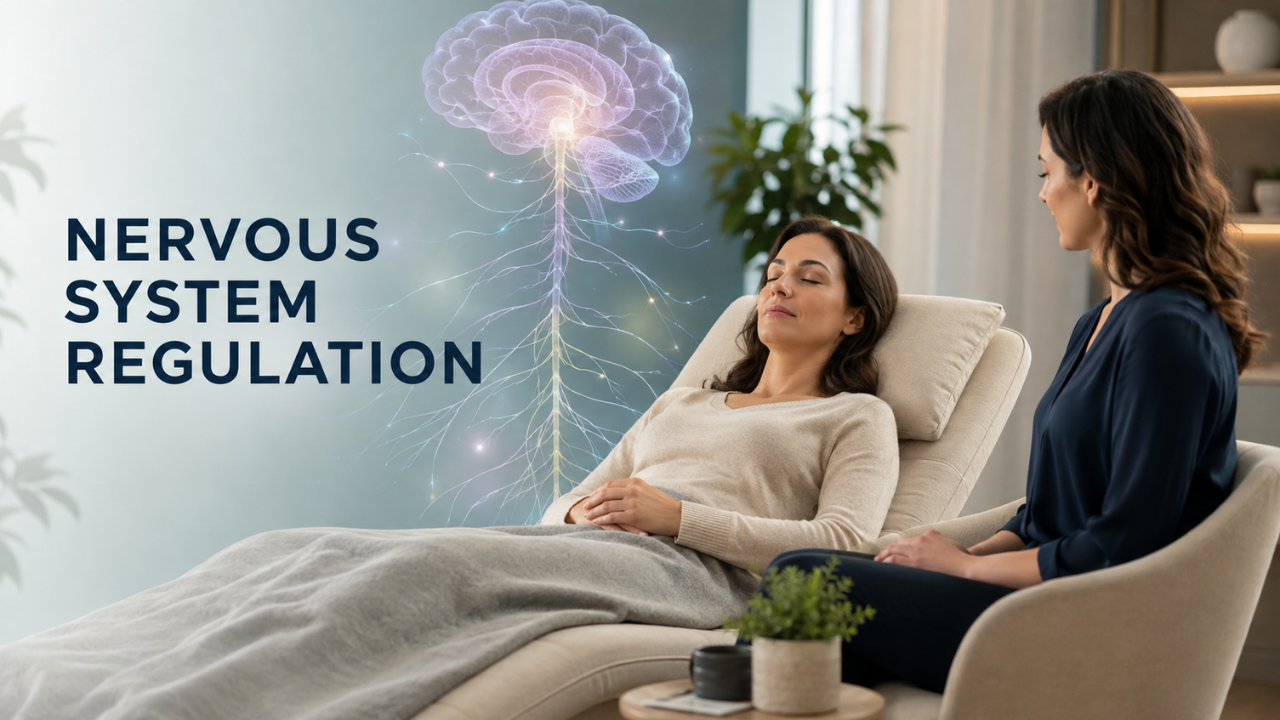
If you've scrolled through Instagram or a wellness newsletter lately, you've probably seen the word "neurowellness" everywhere. It's officially one of the biggest wellness trends of 2026 — but strip away the buzzword, and it's describing something therapists like Dr. Shalini Mehta have been doing for over three decades: helping the nervous system move out of chronic stress and back into balance.
Why Everyone Is Suddenly Talking About the Nervous System
For years, mental health conversations focused mostly on *thoughts* — reframing negative thinking, challenging beliefs, talking things through. That's valuable, but it misses something important: a dysregulated nervous system can keep you anxious, wired, or shut down no matter how much you "think positive."
This year's wellness trend reports point to a shift toward **precision nervous system optimization** — objectively identifying stress and resilience patterns and retraining them in real time. In plain language: it's not enough to know *why* you're stressed. You need tools that actually change how your body and brain respond to stress.
That's exactly where hypnotherapy has quietly been ahead of the curve.
How Hypnotherapy Supports Nervous System Regulation
Hypnotherapy works by guiding the mind into a deeply relaxed, focused state — one where the nervous system shifts out of "fight, flight, or freeze" and into a state where new patterns can actually take root. Some of the ways this shows up in practice:
- Interrupting stress loops. Chronic anxiety often runs on autopilot — the same trigger, the same spiral, every time. Hypnotherapy helps create a pause between the trigger and the reaction, giving the nervous system a chance to respond differently.
- Calming the body, not just the mind. Guided relaxation techniques used in hypnotherapy directly engage the body's relaxation response, similar in effect to the breathwork and grounding practices now trending under "neurowellness."
- Rewiring old patterns at the root. Many anxiety and stress responses were formed years ago — often in childhood — and hypnotherapy works with the subconscious mind, where those patterns actually live, rather than only addressing surface-level thoughts.
- Supporting physical symptoms tied to stress. Conditions like high blood pressure and thyroid imbalances are increasingly understood to have a stress-nervous-system component, which is why a holistic approach — mind and body together — tends to work better than treating symptoms in isolation.
What This Looks Like Day-to-Day
You don't need a health crisis to benefit from nervous system work. Everyday signs that your nervous system may be stuck in overdrive include:
- Feeling "on edge" even when nothing is actively wrong
- Trouble winding down at night despite being exhausted
- Snapping at small frustrations
- A racing mind that won't quiet down, even during rest
The good news: the nervous system is trainable. With consistent, guided work — whether through hypnotherapy sessions, NLP techniques, or simple daily practices like breathwork — the body can learn a new baseline.
A Trend Worth Keeping
Unlike some wellness fads that fade by next year, nervous system regulation is likely to stick around, because it addresses something foundational: how we actually feel in our bodies, day to day. If 2026 is the year "neurowellness" goes mainstream, it's really just catching up to what hypnotherapy and mind-body coaching have offered for a long time.
If you've been feeling chronically wired, anxious, or stuck in old stress patterns, working with a clinical hypnotherapist can be a powerful starting point — not to mask the stress, but to retrain how your nervous system responds to it at the root.
Curious whether hypnotherapy could help your specific situation? [Book a consultation](https://calendly.com/dr-shalinimehta) to talk it through.