
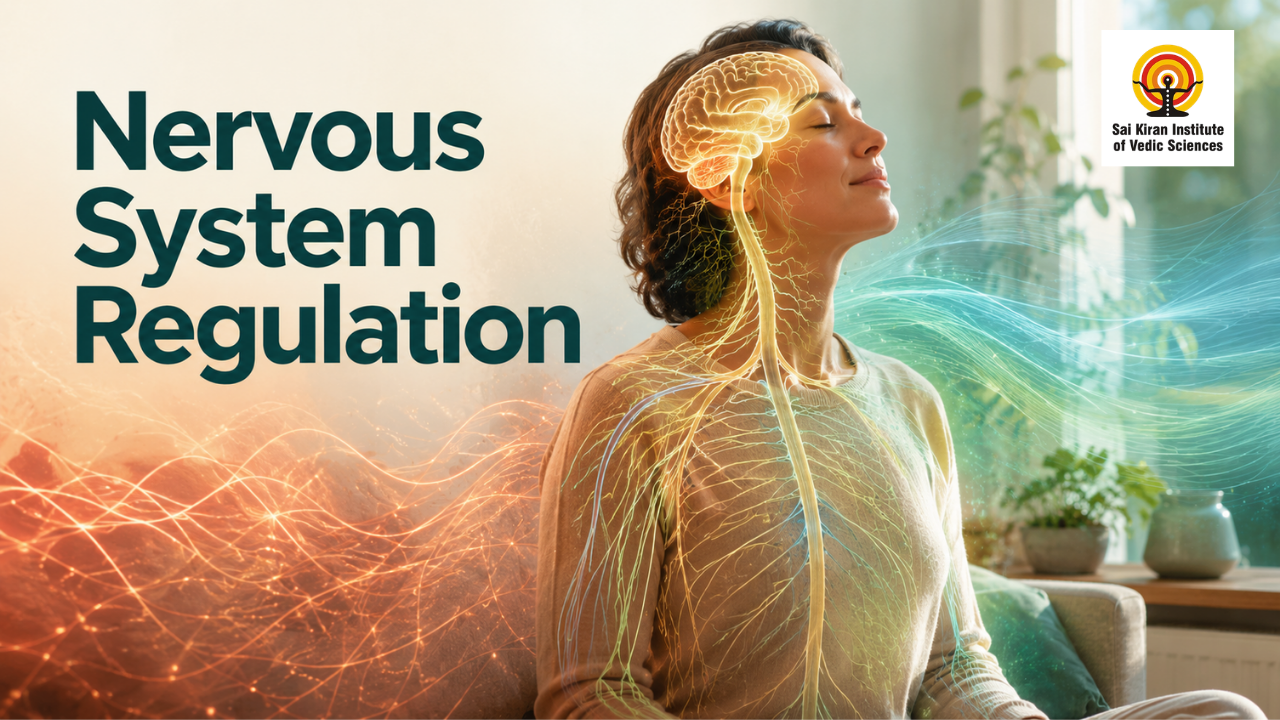
If you've spent any time on social media lately, you've probably seen the phrase "regulate your nervous system" tossed around — in reels, in therapist captions, in wellness newsletters. It's become one of those terms that everyone repeats but not everyone fully understands. So let's slow down and actually unpack it.
What Does "Nervous System Regulation" Actually Mean?
Your nervous system is constantly scanning the environment for safety or threat — a process called neuroception. When it senses danger (real or perceived), it shifts into fight, flight, or freeze. When it senses safety, it settles into a calm, connected state where you can think clearly, connect with others, and make good decisions.
"Regulation" simply means having the capacity to move between these states appropriately, and to return to calm after stress — rather than getting stuck in high alert or shutdown.
Most of us aren't taught how to do this. We're taught to "push through," "stay strong," or "just relax," none of which actually teach the body how to come back to baseline.
Signs Your Nervous System Might Be Dysregulated
- Feeling wired but exhausted at the same time
- Snapping at small things that didn't used to bother you
- Trouble sleeping despite being tired
- A constant low-grade sense of dread or unease
- Feeling numb, foggy, or disconnected from your own life
- Physical tension — jaw clenching, shallow breathing, tight shoulders
If several of these sound familiar, it doesn't mean something is wrong with you. It usually means your body has been operating in survival mode for longer than it was designed to.
Why This Matters More Than Willpower
Here's the part most people miss: you cannot think your way out of a dysregulated nervous system. Logic lives in the prefrontal cortex, but survival responses are governed by older, faster parts of the brain that don't respond to reasoning. Telling yourself to "calm down" during a stress spiral is a bit like shouting instructions at someone underwater — the message doesn't land where it needs to.
This is why body-based approaches tend to work better than willpower alone.
A Few Gentle Places to Start
1. Slow exhale breathing — make your exhale longer than your inhale. This alone signals safety to your body.
2. Orienting — slowly look around the room, naming a few things you see. This reminds your nervous system that you're actually safe in the present moment.
3. Consistent rhythm — regular sleep, meals, and movement give your body predictability, which nervous systems love.
4. Supported reflection — working with a coach or therapist trained in body-based approaches can help you notice patterns you can't see on your own, and build regulation skills that stick.
The Bigger Picture
Nervous system regulation isn't about eliminating stress — that's not realistic or even healthy. It's about building enough flexibility that you can move through stress and come back to center, again and again, instead of staying stuck there.
It's less a destination and more a skill — one that, like any skill, gets stronger with practice and the right support.
This article is for general educational purposes and isn't a substitute for individualized therapeutic or medical advice.