
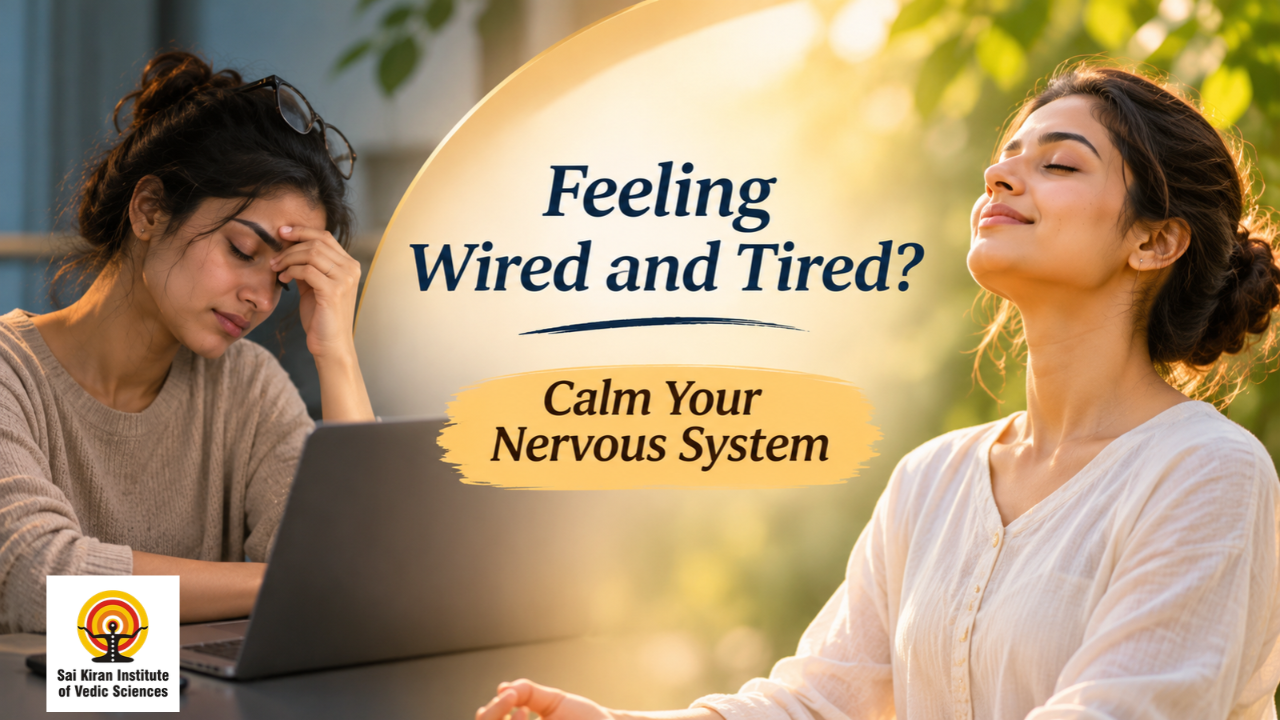
Do you pick up your phone the moment you wake up? Do you feel exhausted by evening but still unable to switch off at night? You are not alone. Constant notifications, endless scrolling and the pressure to always be available keep our minds in "alert mode" from morning to midnight. Many people describe it as being wired and tired at the same time.
What is really happening inside
Your nervous system is designed to react to danger and then return to calm. In today's digital world, small stressors arrive all day: a work message, a news alert, a comparison on social media. The body treats each one as a mini-threat. Over time, the stress response stays switched on. This can show up as irritability, poor sleep, racing thoughts, tight shoulders, headaches and difficulty concentrating.
The good news is that your nervous system can be retrained. Calm is a skill, and skills can be practised.
1. Start with your breath
Breath is the fastest bridge between body and mind. Try this simple practice: inhale gently through the nose for four counts, then exhale slowly for six to eight counts. Repeat for five minutes. A longer exhale signals safety to your body. Doing this before bed or before a stressful meeting can noticeably settle your mind.
2. Create tech-free pockets
You don't need a complete digital detox. Start small. Keep the first 30 minutes of your morning and the last 30 minutes of your night screen-free. Charge your phone outside the bedroom. These small boundaries give your brain space to rest.
3. Reframe your inner dialogue
Notice how you speak to yourself when you feel overwhelmed. "I can't cope" or "I'm falling behind" keep your stress alive. NLP techniques such as reframing help replace these thoughts with balanced ones, like "I'm doing my best, and I can take this one step at a time." Language shapes emotion, so change the words and the feeling begins to shift.
4. Use guided relaxation and hypnotherapy
Hypnotherapy uses focused attention and deep relaxation to help the subconscious mind let go of stress patterns. Many people find it helpful for anxiety, restlessness and sleep difficulties. Even a short guided relaxation each evening can teach your body what calm feels like.
5. Move and connect
Gentle yoga, a walk in nature, or a heartfelt conversation with a friend all help your body release stored tension. Real connection is a powerful antidote to digital overload.
A small step today
Tonight, put your phone away 30 minutes before sleep, take ten slow breaths, and place a hand on your heart. That is the start of a calmer you.
If stress and overthinking have become your daily companions, you don't have to manage them alone. Professional guidance can help you understand your patterns and build lasting emotional balance.
Ready to feel calm again? Book a consultation with Dr. Shalini Mehta and begin your journey to inner peace.